
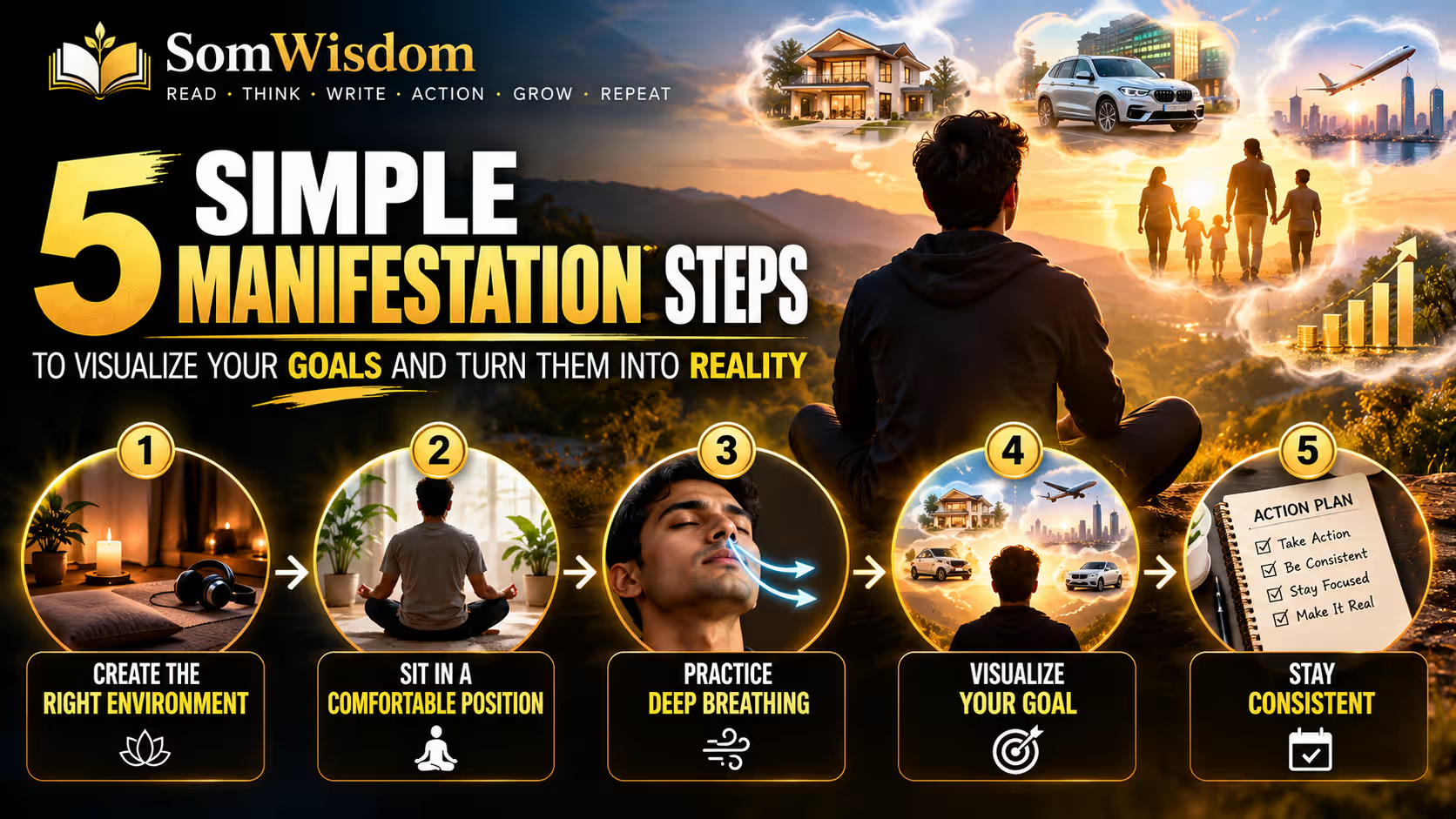
5 Simple Meditation Steps to Calm Your Mind and Focus on Your Goals
SEO Title: 5 Simple Meditation Steps to Calm Your Mind & Focus on Your Goals
Focus Keyword: meditation steps
Slug: 5-simple-meditation-steps
Meta Description: Learn 5 simple meditation steps you can practice for 10–20 minutes daily to calm your mind, improve focus and visualize your goals.
5 Simple Meditation Steps to Calm Your Mind and Focus on Your Goals
Do you sometimes feel that your mind is constantly busy?
You may have big dreams, career goals, business ideas or personal goals—but somehow, you struggle to stay focused on them.
You start something…
Then your phone distracts you.
You think about yesterday.
You worry about tomorrow.
And before you know it, another day has passed.
The problem isn’t always a lack of ambition.
Sometimes, your mind simply needs a few quiet minutes to slow down and refocus.
That’s where meditation can become a useful part of your daily routine.
You don’t necessarily need an hour-long meditation session or a complicated technique.
You can start with just 10–20 minutes a day.
In this article, we’ll explore 5 simple meditation steps that can help you create a calm environment, focus on your breathing, visualize an important goal and—most importantly—turn your thoughts into action.
🎥 Want to experience these steps instead of just reading about them?
Watch the complete meditation guide on the Som Wisdom YouTube channel.
[WATCH THE FULL VIDEO →]

Why Should You Try Meditation?
Modern life gives our attention hundreds of things to think about.
Notifications.
Social media.
Work.
Money.
Family responsibilities.
Future plans.
Because of this, finding a few minutes of quiet can be valuable.
Meditation isn’t a magic solution that will suddenly solve every problem in your life.
Instead, for many people, it can be a simple practice for slowing down, noticing thoughts and bringing attention back to the present moment.
And when combined with goal-setting and consistent action, it can become part of a productive daily routine.
So let’s look at the five steps.
Step 1: Create a Calm Environment
Before starting meditation, make your surroundings as comfortable and distraction-free as possible.
You don’t need a special meditation room.
A quiet corner of your home can be enough.
Try these simple things:
- Put your phone on silent.
- Turn off unnecessary notifications.
- Choose a comfortable place.
- Reduce unnecessary noise.
- Keep the lighting comfortable.
- Use headphones if they help you avoid distractions.
Some people enjoy listening to soft instrumental music or meditation audio.
You may also come across popular frequency-based meditation tracks such as 432Hz, 528Hz or 741Hz.
However, claims about specific frequencies producing special psychological or physiological effects aren’t strongly established by scientific evidence.
So don’t worry about finding a “perfect frequency.”
Choose audio that personally helps you feel relaxed and focused—or simply meditate in silence.
Once your environment is ready, move to the next step.
Step 2: Find a Comfortable Position
You don’t need to sit in a complicated yoga position.
The goal is simply to find a position where you can remain comfortable and reasonably alert.
You can:
- Sit cross-legged on the floor.
- Sit on a meditation cushion.
- Sit on a chair.
- Keep your back comfortably upright.
- Relax your shoulders.
- Place your hands on your lap or thighs.
The most important thing is comfort without becoming too sleepy.
If you’re extremely tired, lying down may simply turn your meditation session into a nap.
And honestly…
Sometimes that’s exactly what your body needs!
But if your goal is meditation, try to remain comfortably awake.
Step 3: Focus on Your Breathing
Now gently close your eyes.
Bring your attention to your breathing.
Don’t try to control every breath.
Simply observe it.
You can try a slow breathing pattern such as:
Slowly breathe in…
Then slowly breathe out.
Continue this for several minutes while paying attention to the movement of your breath.
You may notice your chest moving.
You may notice your stomach moving.
You may feel the air entering and leaving your nose.
Just observe.
What if your mind starts wandering?
This is completely normal.
You might suddenly think:
“What do I have to do tomorrow?”
Or:
“Why did I say that yesterday?”
Or:
“I need to check my phone.”
Don’t fight those thoughts.
Simply notice them.
Then gently bring your attention back to your breathing.
Thought → Notice → Return to breathing.
That’s it.
You don’t need to have a completely empty mind.
Step 4: Visualize an Important Goal
Once your breathing becomes calmer, allow your attention to move toward something meaningful.
Think about one important goal in your life.
It could be:
- Building a business
- Improving your health
- Getting a better job
- Learning a new skill
- Becoming financially independent
- Improving your relationships
- Completing an important personal project
Now imagine yourself having achieved that goal.
Where are you?
What does your life look like?
Who is around you?
How do you feel?
Maybe you feel proud.
Maybe you’re peaceful.
Maybe you’re excited.
Maybe you’re simply grateful.
Take a few moments to imagine that future.
But there’s one important step that many people forget.
Ask yourself:
“What can I do today to move one step closer to this goal?”
This changes visualization from simply imagining a future into thinking about action.
For example:
Instead of only imagining yourself becoming fit…
Think:
“Today, I’ll walk for 30 minutes.”
Instead of only imagining a successful business…
Think:
“Today, I’ll spend one hour working on my business.”
Instead of imagining yourself reading more books…
Think:
“Tonight, I’ll read 10 pages.”
Your goal doesn’t need to be achieved today.
You just need to identify your next action.
Step 5: Make It Consistent
This may be the most important step.
Consistency.
You don’t need to meditate for one hour on your first day.
Start small.
Try:
5–10 minutes a day.
Once you’re comfortable, you can gradually increase it to:
15–20 minutes.
Some days will feel easy.
Some days your mind will be extremely distracted.
Some days you may only manage five minutes.
That’s okay.
Don’t turn meditation into another reason to feel guilty.
The goal isn’t perfection.
The goal is to return to the practice again and again.
🧠 The Real Purpose of This Practice
Meditation isn’t about sitting with your eyes closed and magically making your dreams come true.
You can visualize your goals every day…
But visualization alone doesn’t build a business.
Visualization alone doesn’t improve your health.
Visualization alone doesn’t develop your career.
Action does.
Meditation can simply become a tool that helps you pause, reflect and bring your attention back to what matters.
Think of the process like this:
Calm your mind → Identify your goal → Decide your next action → Take action → Repeat.
That’s where the real transformation can happen.
🌱 Meditation + Action = A Better Daily Routine
Imagine starting your day with just 10 minutes.
You sit quietly.
You focus on your breathing.
You allow distractions to settle.
You think about what matters most.
You visualize your goal.
And then you ask yourself:
“What is one thing I can do today that will move me closer to it?”
Now you have something practical to work with.
Because personal growth isn’t about having the perfect morning routine.
It’s about consistently doing meaningful things.
⏱️ A Simple 10-Minute Meditation Routine
If you’re a beginner, you can try this simple structure:
| Time | Practice |
|---|---|
| 1 minute | Get comfortable and settle down |
| 3 minutes | Focus on slow, natural breathing |
| 3 minutes | Visualize your important goal |
| 2 minutes | Identify today’s action |
| 1 minute | Sit quietly and finish the practice |
You can adjust the timing according to your comfort.
There is no need to make it complicated.
🚫 Don’t Make These Common Meditation Mistakes
1. Trying to completely empty your mind
Thoughts are normal.
Your goal isn’t necessarily to eliminate every thought.
Instead, notice distractions and gently return your attention.
2. Expecting instant results
One meditation session won’t transform your life.
Give yourself time to build the habit.
3. Making the routine too complicated
You don’t need expensive equipment.
A quiet place and a few minutes are enough to begin.
4. Only visualizing without acting
This is perhaps the biggest mistake.
A goal needs action.
After visualization, decide what you’re going to do next.
5. Giving up because your mind wanders
Your mind wandering doesn’t mean you’re failing.
Every time you notice it and return your attention, you’re practicing.
🎯 The 5 Steps at a Glance
Let’s quickly recap.
1. Prepare your environment
Find a quiet and comfortable place.
2. Choose a comfortable posture
Keep your body relaxed and reasonably upright.
3. Focus on breathing
Slow down and bring your attention to your breath.
4. Visualize your goal
Imagine your desired future and identify one action you can take today.
5. Stay consistent
Start small and make the practice part of your routine.
📺 Watch the Complete Meditation Guide
Reading about meditation is useful.
But sometimes it’s easier to follow along with someone guiding you through the process.
In the Som Wisdom video, I’ll take you through these five steps and explain how you can incorporate them into your daily routine.
🎬 Watch the full video here:
Don’t just watch it. Try the 10-minute practice today.
❤️ Final Thought
You don’t need to completely change your life tomorrow.
Start with something small.
Give yourself a few quiet minutes.
Breathe.
Reflect.
Think about what really matters.
Then take one small action.
Because ultimately…
Thinking is important.
Learning is important.
But action is what moves you forward.
And that’s the philosophy behind Som Wisdom:
Read. Think. Write. Action. Grow. Repeat.
कुछ पढ़ोगे… कुछ सीखोगे… तभी तो आगे बढ़ोगे!
If you’re interested in books, self-improvement, productivity, habits, psychology, business and personal growth, explore more articles and videos from Som Wisdom.
Keep Learning.
Keep Growing.
Keep Becoming Better.